
(CLAIR | Simi Valley, CA) -- Sometime in the spring of 1977, two radio DJs walked into the office of a Florida game show syndicator named Marvin Kempner with a pitch that sounded like science fiction: a television program where people at home could play a video game. Not watch one. Play one. Live. Over the phone.
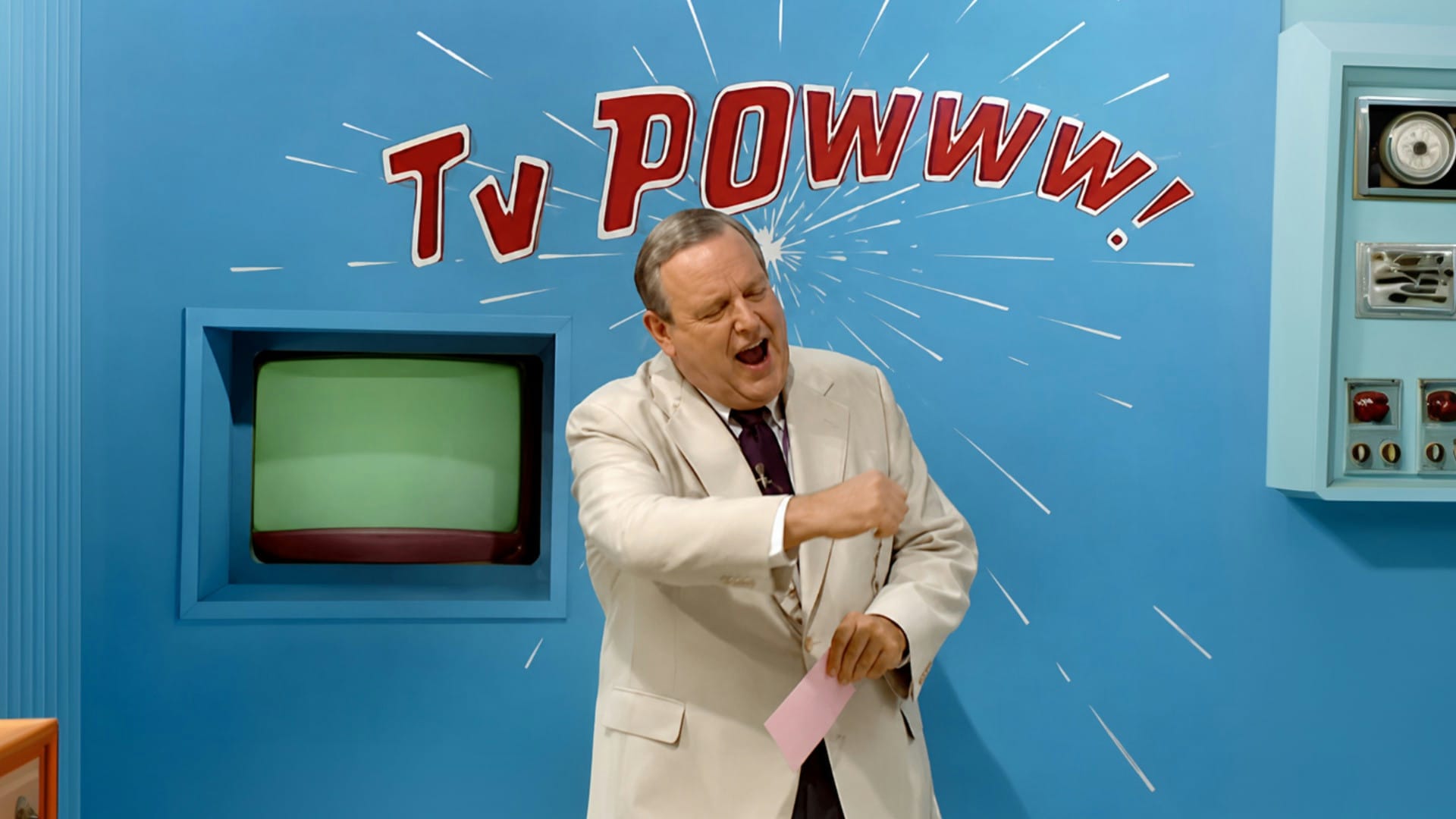
What they built instead became one of the strangest and most quietly prophetic experiments in the history of interactive technology. It was called TV POWWW!, and to understand where voice assistants, conversational AI, and the dream of talking to machines actually began, you could do a lot worse than to start with a kid in 1979, sitting on the kitchen floor with the phone cord stretched across the room, screaming a single word at a television set.
That word was "Pow."
The dream of a responsive machine
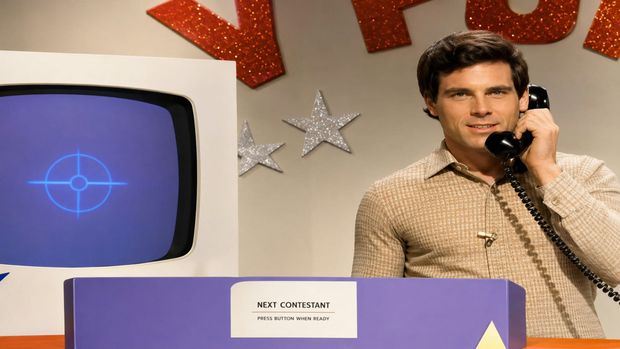
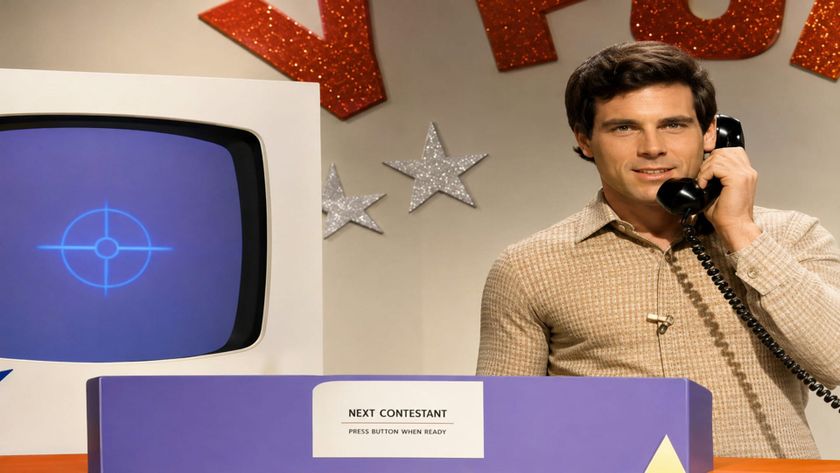
The premise was almost impossibly simple, which is part of why it worked. A child called in to the local station and was patched through, live, to the broadcast. On the screen, a primitive shooting game played out — a target, a crosshair, the slow scroll of early console graphics. When the player wanted to fire, they yelled "Pow!" into the phone. On screen, the gun fired. Hit the target, win a prize. Miss, and the whole city watched you miss.
For a kid in 1979, this was magic of the highest order. You spoke, and the machine on television obeyed. There was no keyboard, no controller in your hand, no instruction manual. Just your voice and a screen across the country responding to it. This was the fantasy that science fiction had been selling for decades — the talking computer, the obedient machine, the device that simply understood you — delivered into living rooms a full generation before any of the technology to actually do it existed.
And that is the first beautiful lie of TV POWWW!
The stagehand behind the curtain
Here is how it really worked. Voice recognition in 1978 was barely a laboratory curiosity, nowhere near capable of parsing a child's excited shriek over a long-distance phone line with a three-to-four-second transmission delay. The producers knew this. So they cheated, brilliantly.
Out of frame, a stagehand sat holding the game controller. When the caller yelled "Pow!", the stagehand pressed the fire button. That was the entire system. The "voice activation" that thrilled a generation of children was a human being with good reflexes, hidden just off camera, listening for a kid to shout and pressing a button on cue.
It is the Wizard of Oz, rendered in cathode-ray tube. Pay no attention to the man behind the curtain. The machine did not understand you. A person did, and the person was kind enough to make the machine pretend.
There is something almost tender about it. The illusion wasn't built to deceive so much as to deliver an experience the technology couldn't yet support honestly. The audience wanted the future, so the producers handed them a piece of theater shaped exactly like the future and let everyone enjoy it.
How a phone-line shooting game became proto-esports
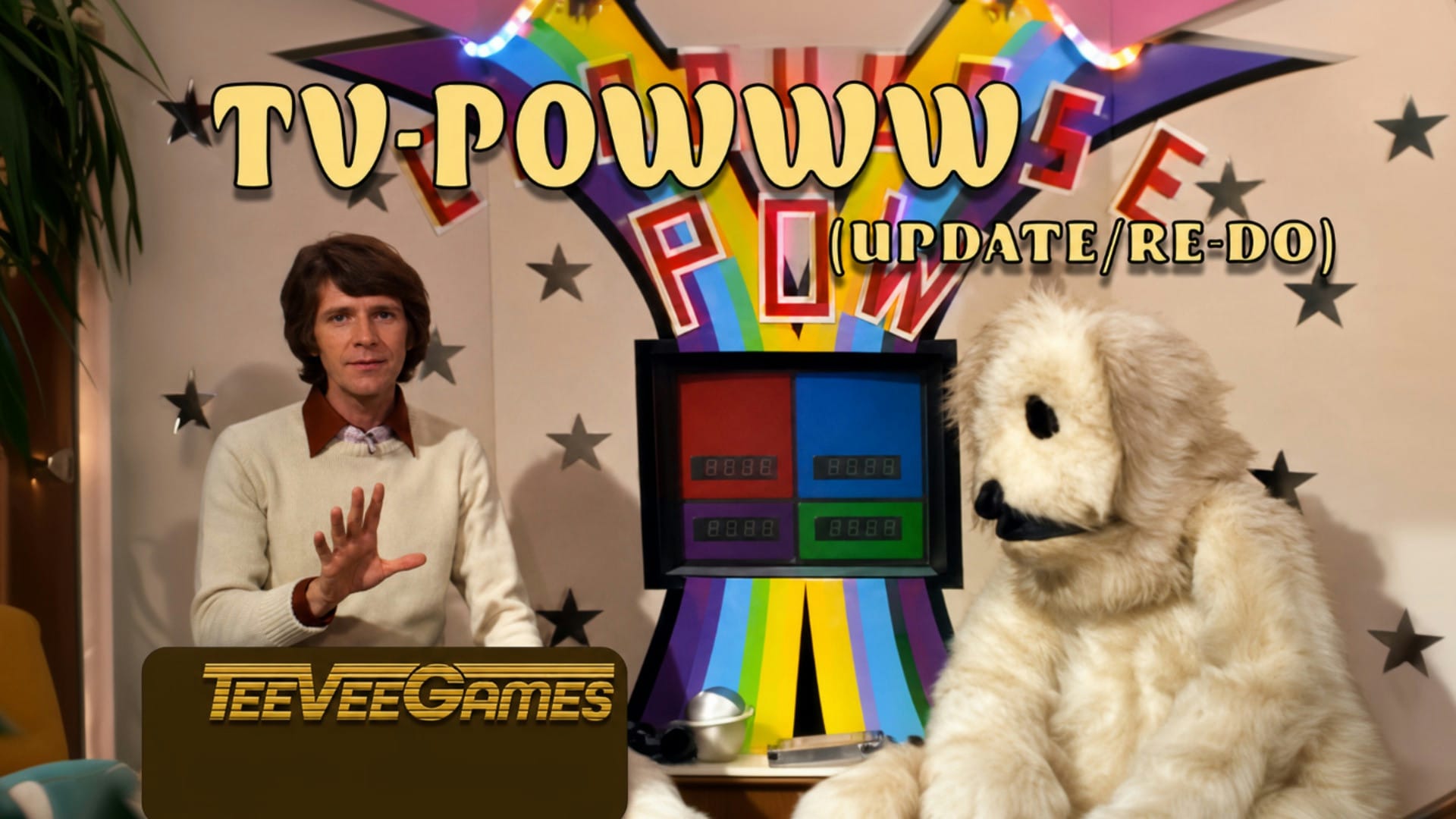
Before it was a curiosity, TV POWWW! was a genuine cultural footprint. After debuting in 1978 on KABC-TV in Los Angeles — within the morning program A.M. Los Angeles, then hosted by a young Regis Philbin — the format spread to seventy-nine stations across North America and aired in several countries through the 1980s, lasting overseas into the early 90s.
Each station made it their own. Most versions were children's programming, slotted into morning cartoon blocks; some skewed toward teens and young adults. Local affiliates improvised their own variants. A New York station reportedly ran a version where callers had to shout "PIX" instead of "Pow." The hardware shifted with the times and the region: the show standardized on the Fairchild Channel F console in the States, while the Canadian version reached for Mattel's Intellivision.
Strip away the nostalgia and look at the structure. Remote players. A live broadcast. Real-time competition for prizes, watched by an audience. Regional tournaments producing local champions — there are people alive today who will tell you, accurately, that they won the city championship of a televised video game in 1981. That is the skeleton of esports, assembled and broadcast two decades before the word existed and long before the internet made it inevitable. The lineage of competitive gaming doesn't begin with a stadium full of League of Legends fans. It begins, at least in part, with a phone cord and the word "Pow."
The illusion we finally built for real
Fast-forward almost fifty years. The fantasy that TV POWWW! faked with a hidden stagehand is now ordinary. You speak to a device on your counter and it dims the lights. You ask your phone a question in plain English and it answers in plain English. You talk to an AI and it talks back, drafts your email, debates philosophy, writes the article you're reading. The thing the producers could only mime in 1978 — a machine that responds to natural human speech — is now so common we are bored by it.
But the old show still has something to teach us, and it lives in that stagehand.
Because the uncomfortable, fascinating truth is that the line between "the machine understood you" and "a human is helping the machine pretend" has never fully disappeared. It has only moved and gotten harder to see. Modern AI systems are trained on the labeled work of enormous numbers of people. Some "automated" services quietly route hard cases to human reviewers. The voice assistant that seems to understand you was taught to do so by armies of annotators you will never meet. The curtain is still there. It's just much larger, and the people behind it are further away.
This isn't a knock on the technology. It's a reminder about how we relate to it. TV POWWW! worked because people wanted to believe the machine heard them, and that desire — the deep human wish to be understood by the things we build — is exactly the force that AI now answers at scale. The danger was never the illusion itself. The danger is forgetting that an illusion is a designed experience, with authorship, with choices, with someone deciding what you get to see and what stays off camera.
What the kid on the kitchen floor knew
The child yelling "Pow" into a telephone in 1979 understood something we're still working out. The appeal was never really about whether the technology was real. It was about the feeling of being heard, of speaking into the void and having the world answer back. The machine fired the shot. The crowd reacted. For one live, terrifying, exhilarating moment, you and the future were in conversation.
We have spent fifty years and untold billions building machines that can finally do, in earnest, what a hidden stagehand once faked for a children's TV show. And the central question hasn't changed at all. It was never can the machine respond to us? The technology answers that now, easily.
The question that TV POWWW! was one of the first to ask, and that we're still living inside, is quieter and more durable: when the machine answers, who is really behind the curtain, and do we still remember to look?
Say it with me.
Pow!