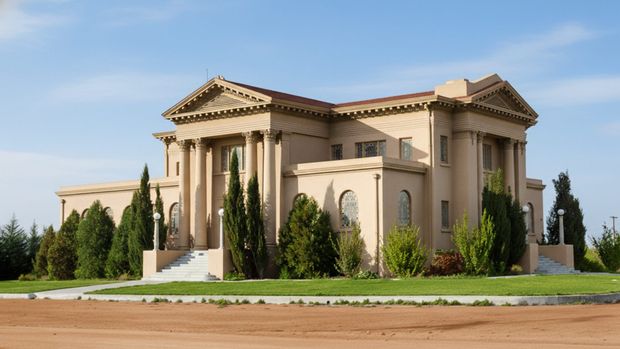
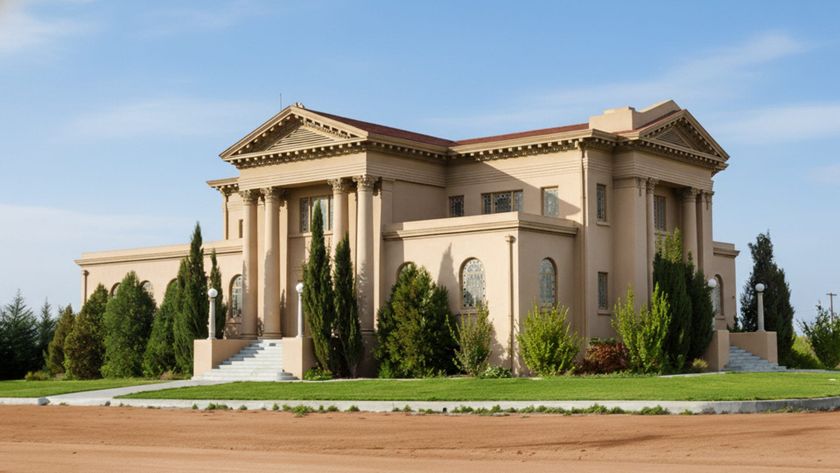
The church that became Simi Valley's Cultural Arts Center rose from an apricot farming valley in 1924 — and the math still doesn't add up.
(CLAIR | Simi Valley, CA) — The building was finished before anyone should have been able to finish it. That is the part of the story that tends to get left out.
Today, people know the structure at 3050 Los Angeles Avenue as the Simi Valley Cultural Arts Center — a neoclassical landmark with white columns, a pipe organ, and the kind of architectural confidence that implies an institution backed by serious resources. Concerts play there. Weddings happen there. The city bought it in 1991 for $820,000. Rita Moreno opened it as a theater in 1995 to a sold-out crowd. The building carries itself like something that was always supposed to exist. But a century ago, the valley surrounding it was farmland, and the people who paid for it were harvesting apricots for export to Germany.
That tension is where the real story starts.
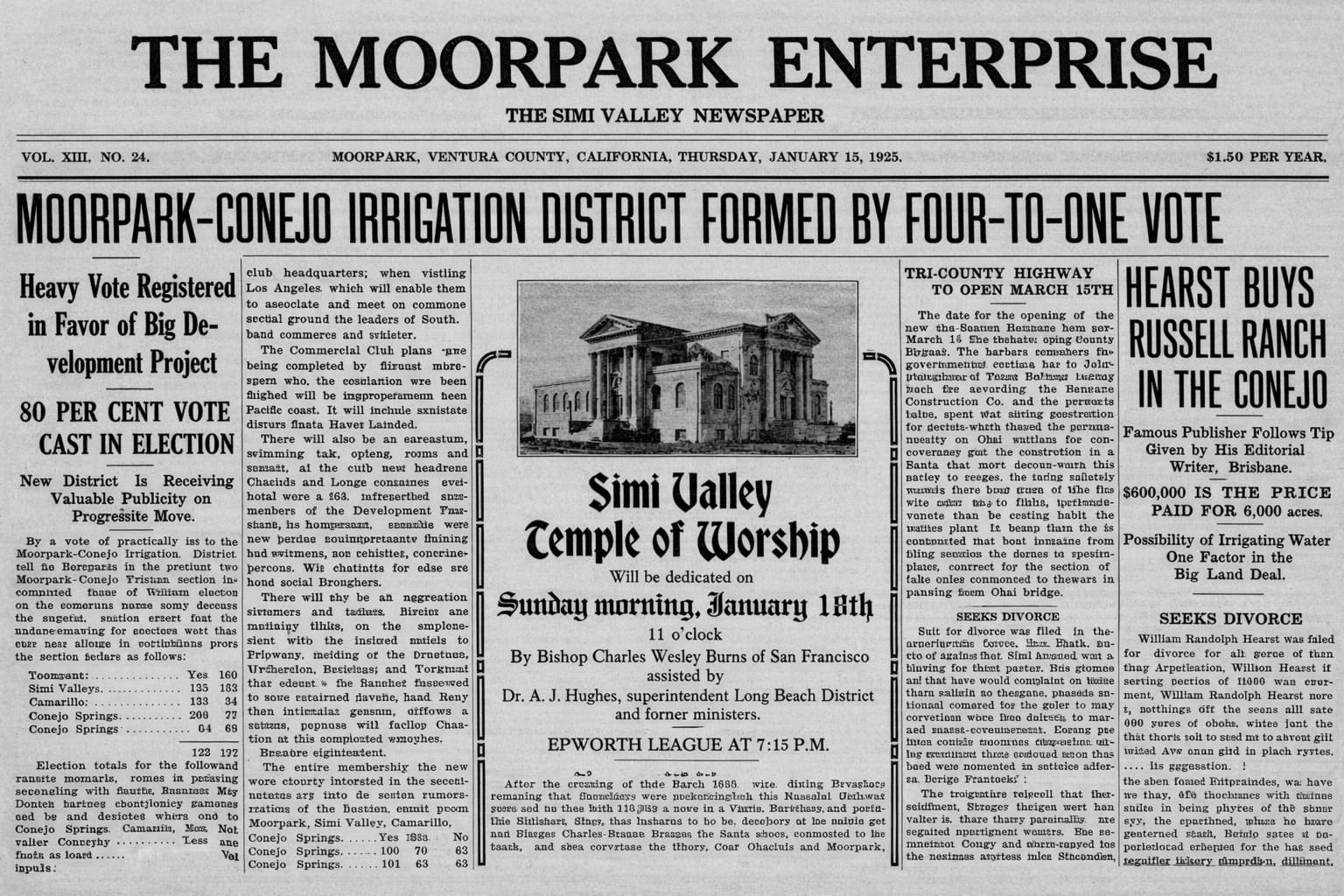
The building went up in 1924 — depending on which account you read, construction began in earnest in 1922 or 1923 and concluded with a formal dedication in January 1925. The congregation responsible for it was Methodist. The designer was Arthur G. Lindley, a Los Angeles architect, and what he produced was not a modest rural chapel. It was a full Greek-style temple, built in reinforced concrete, with an auditorium, classrooms, and service spaces. The structure was designated Ventura County Historical Landmark No. 67 in 1981. It has outlasted every other building built around it from that period. Whatever it is, it was not built to be temporary.
The cost, according to historical records, was approximately $40,000. When adjusted for inflation, that figure approaches $800,000 in today's dollars — and that estimate is almost certainly conservative, given what reinforced concrete construction, skilled labor, and professional architectural design now cost in Southern California. But the raw number matters less than the context surrounding it. In a valley where the total population was approaching one thousand people, a community of farmers raised that amount within a compressed window, fast enough to fund active construction. Not over decades. Not through a large institutional donor. Through individual contributions from people earning two to four dollars a day.
Ninety-three percent of those approached gave something.
That participation rate, documented in historical accounts of the campaign, is the kind of number that tends to appear in controlled settings — in capital campaigns run by organizations with dedicated fundraising staff, donor research, and follow-up systems. It does not typically appear in farming communities operating without electricity in every home, without reliable roads, and without any infrastructure that would make coordinated communication easy. A one-dollar donation in 1924 Simi Valley could represent a third of a day's wages. A five-dollar contribution was real money. Fifty dollars was, for some families, close to a month of available income. And nearly every household in the valley gave something.
It is worth sitting with that for a moment before moving on.
The valley itself was in an unusual position at the time. By 1925, four separate communities had come into being, and the population was nearing one thousand. World War I had curtailed exports of dried fruits, temporarily halting expansion of apricot acreage. (https://venturamuseum.org/journal-flashback/the-changing-agricultural-landscape-of-the-simi-valley-from-1795-to-1960/) The farmers who remained had diversified into walnuts, oranges, and other tree crops — but the economy was still thin, still dependent on weather and markets outside anyone's control, still functioning on the kind of margins where a failed harvest could reset a family's finances for years. These were not people with surplus. They were people who calculated every dollar before spending it, because they had to.
And yet the church went up.
The neoclassical structure was designed by prominent architect Arthur G. Lindley and built at the corner of Los Angeles Avenue and the aptly named Church Street, anchoring a new development that became known as Community Center. (https://www.beyondtheacorn.net/articles/simis-true-community-center/) That development was itself new — in 1922, L.F. Roussey had laid out the small development, driven by the need for a high school and an elementary school in a more central location in the valley. (https://en.wikipedia.org/wiki/Simi_Valley,_California) The first graduating class from Simi High School was 1924. The church finished the same year. The elementary school finished in 1926. Everything happened at once, in a valley that had almost no institutional infrastructure, in a window of roughly three years.
That timing raises questions worth asking openly.
A reinforced concrete structure of this scale requires engineering drawings, material sourcing, and a construction sequence that assumes predictable delivery. Cement, aggregate, and steel do not accumulate naturally in a farming valley. They move by rail to nearby areas and then overland by wagon or early truck — each load requiring coordination, unloading, and staging before work can continue. The Southern Pacific line ran through the valley by that point, which helps explain the logistics partially. But the railroad's main depot was at Santa Susana, some distance from the construction site. Materials still needed to travel the last stretch by road. In 1922, those roads were not what they are now.
Skilled labor presents a similar question. Concrete formwork, reinforcing steel, and structural pours require workers with experience that a farming community does not necessarily carry within its own population. Some workers were almost certainly brought in from Los Angeles or surrounding areas. They needed to be housed. They needed to be fed. They needed to be paid, consistently, over an extended period. In a valley with limited lodging and no established contractor infrastructure, that means local households absorbed much of that burden. Visiting workers likely stayed with families, ate at local tables, and became a temporary extension of the community itself for the duration of the build.
None of this is impossible. Communities have organized under harder conditions. But the compression of the timeline, laid against the economic reality of the valley, leaves a gap that the documented record does not fully close.
Set amid farmland, the building quickly became a vital hub for worship, community meetings, and local events. Over the next four decades, it hosted church services, Scout meetings, weddings, Sunday school, and even Mother's Day performances by the Simi Elementary School girls' glee club. (https://www.svcac.org/history) A pipe organ drew musicians from communities across the region. The building functioned, for decades, as the effective social center of a valley that had no other space large enough to serve that role.
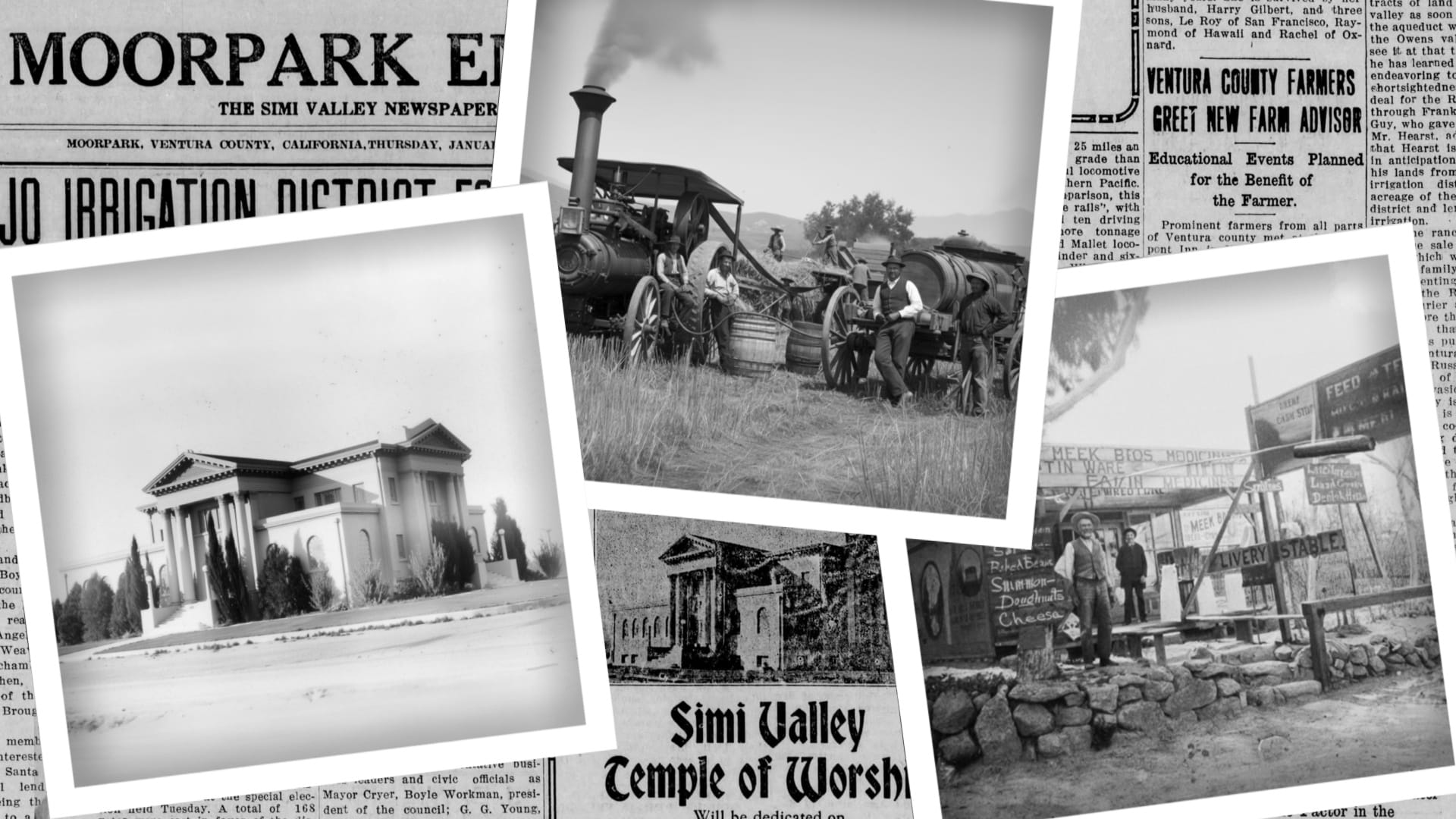
After the Methodist congregation relocated in 1966, the ornate building on Los Angeles Avenue served many different organizations and congregations over the years. It was home to a Jewish synagogue, Simi Covenant Church, and even a mortuary owned by Mayor Bob Huber. (https://www.simivalleyacorn.com/articles/methodist-roots-run-deep-in-city/) Huber lived inside the building for nine years with his family. He later described what the place had meant to the community during its early decades: "It was ranching and farming at the time. That was the community center." By the late 1980s it sat vacant, until the city purchased and renovated it.
The building survived all of it. The reinforced concrete held. The columns held. The structure that farmers in a struggling apricot valley decided to build in the early 1920s — without modern construction equipment, without digital communication, without the kind of fundraising infrastructure that organizations now take for granted — is still standing and still in use a hundred years later.
That is the part the historical record handles well. What it handles less well is how the community managed to close every gap simultaneously — the money, the labor, the materials, the coordination — within a timeline that, measured honestly against the conditions of the time, seems tighter than it should have been.
The conventional explanation is community will. People believed in the project, contributed what they had, and organized around a shared purpose. That explanation is probably correct in its broad strokes. Communities have accomplished harder things with fewer advantages. Faith-driven projects, in particular, have a long history of drawing levels of commitment that purely financial analysis cannot fully predict.
But community will does not pour concrete. It does not sequence foundation work. It does not manage the scheduling conflict between harvest season and construction deadlines. It does not solve the problem of housing skilled workers in a valley without hotels. Someone, or several people, held all of those problems at once and moved through them without interruption significant enough to appear in the historical record.
The name most associated with the project's momentum is the Rev. Ralph Lee, the pastor who decided the congregation needed a new location and pushed the development of Community Center as the site. (https://www.simivalleyacorn.com/articles/methodist-roots-run-deep-in-city/) The historical record credits him with driving the vision. It is less specific about the operational architecture beneath it — who coordinated the supply chain, who arranged worker housing, who managed cash flow between donation cycles and construction draws.
Those details, if they were ever written down, have not surfaced.
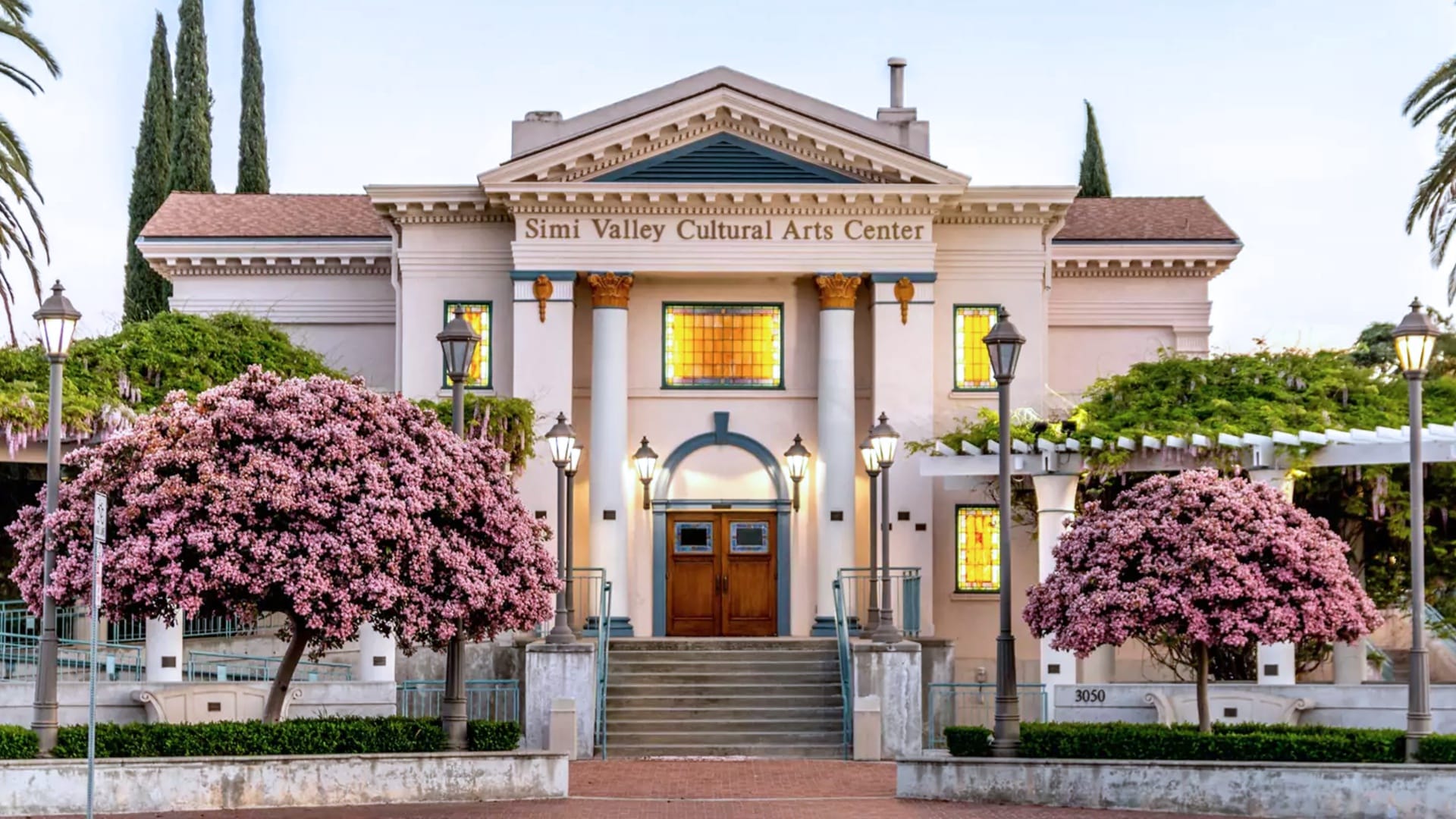
What has surfaced is the building itself. It stands on the corner of Los Angeles Avenue and Church Street, its columns unchanged, its footprint unchanged, its weight in the landscape unchanged. People drive past it daily without necessarily knowing that the valley surrounding it looked completely different when it was built — that the current shopping centers, the housing tracts, the schools, and the freeways did not exist; that the nearest city was accessible only by rail or unpaved road; that the people who paid for it were drying apricots on wooden trays in fields that no longer exist.
The building is older than the city it now serves. It was there before Simi Valley had a name, before it had a zip code, before anyone thought to incorporate it into anything. It was built in a brief window of unusual coordination, by people operating at the edge of their financial capacity, on a timeline that the available record cannot fully explain.
That may be enough. Sometimes a community decides to build something that outlasts every question about how they pulled it off. The structure at 3050 Los Angeles Avenue is a hundred years of evidence that the decision held.
What drove the decision in the first place — the precise mechanics of it, the names behind the logistics, the source of a coordination that looks, across the distance of a century, almost improbably clean — remains, for now, a question the valley has not fully answered.