
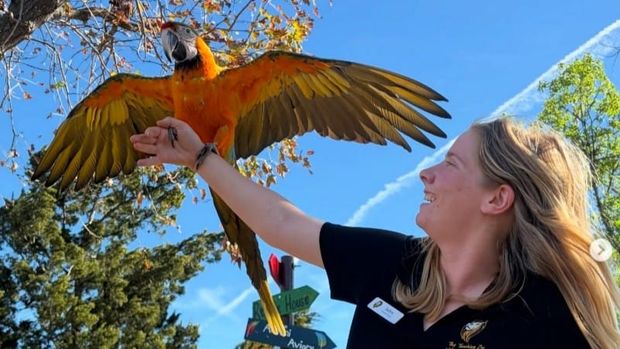
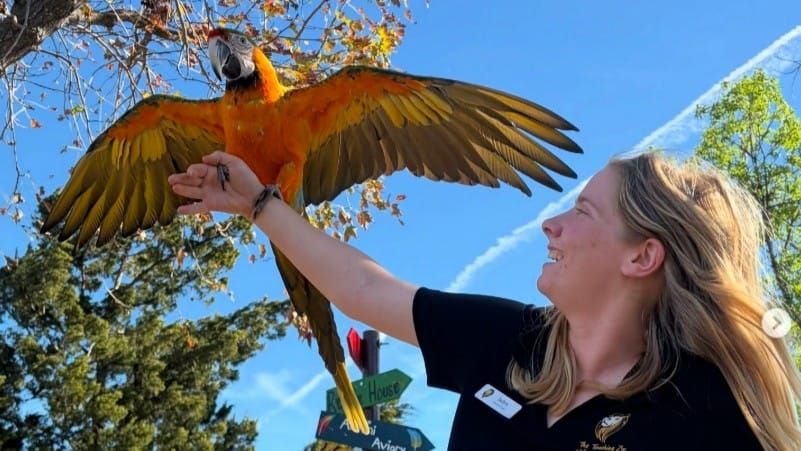
America's Teaching Zoo combines hands-on animal care education with weekend visits from the public
On five sun-warmed acres overlooking the Moorpark College campus, more than 100 exotic animals live, train and teach, and on weekends, the public can walk right in.
(CLAIR | Simi Valley, CA) — Neil the Bengal tiger weighs about 400 pounds and was rescued as a cub from an illegal Hollywood Hills residence in 2017. Now he lives at America's Teaching Zoo on the Moorpark College campus, where students learn to read his body language and feed him through reinforced mesh as part of their daily training.
The zoo opens its gates to the public every Saturday and Sunday from 11 a.m. to 4:30 p.m., offering visitors a chance to watch students work with more than 125 exotic animals across five sun-warmed acres. General admission costs $12 for adults and $10 for seniors and children.
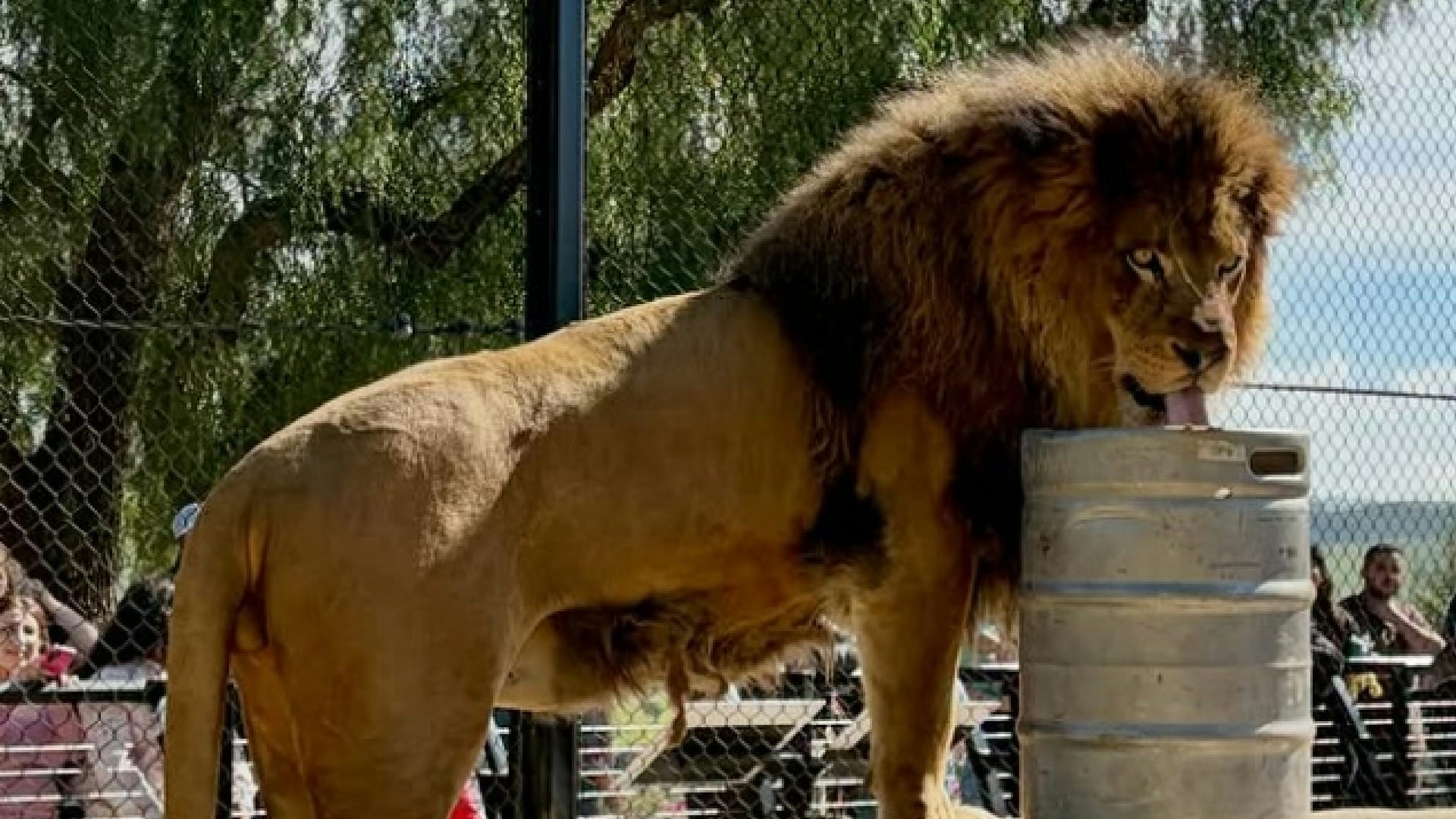
The schedule runs like clockwork: training demonstrations at 12:15 p.m., keeper talks at 1 p.m., wildlife presentations at 2:30 p.m., and feeding demonstrations at 3:30 and 3:45 p.m. Visitors might catch Clarence, a 103-year-old Galapagos tortoise who has been alive since 1923, munching a snack in the sun or see Ira the African lion prowling his new enclosure, built after years of fundraising.
But the real work happens behind the scenes, where the Animal Care and Training Program has been preparing students for careers in zoological work since 1974. Professor Bill "Briz" Brisby launched the program with one wolf named Kiska. The operation moved to its current location in 1990 and now houses animals ranging from Bengal tigers to exotic birds.
Students spend two years combining classroom academics with hands-on animal care. They wake up early, work long hours, and show up on holidays. The program awards either a Certificate in Animal Care and Training or an Associate of Science degree. Graduates move on to jobs in zoos, aquariums and animal care facilities.
"This is not just coming here and petting animals," explained one educator in the program on the teaching zoo's social media at instagram.com/theteachingzoomc/?hl=en. "The largest and most important component of this work is the hard work, the sacrifices we make for animals, the hours that we wake up, the long hours we work, being here on holidays, being here in the heat."
First-year student Cahner discovered that managing his time meant factoring in the needs of dozens of animals, not just his own schedule. "Everyone always talks about time management, and I honestly feel like I'm pretty good at time management, but it's a whole different ball game when your time management includes not just teammates but also the animals," he said in a video posted to the zoo's Instagram account.
The teamwork element surprised him. "How much of a team effort everything is," he said. "It's really cool to work with a bunch of people and get all the different ideas." As a first-year student, he had recently gained access to working with the larger animals.
Working with big cats requires specific skills that students must master. When feeding tigers, students learn to avoid direct eye contact while maintaining visual awareness. "You have to stay in control. You especially can't stare at the tiger right in his eyes. You have to have the right eye placement," one student explained to wildlife educator Jordan Veasley, known as "Jungle Jordan," during a filmed conversation. "You don't want to look away from the tiger as you're feeding, because at that point you don't know what they're thinking or what they're planning."
Neil shares his habitat, called Rajah's Retreat, with Karma, a female Bengal tiger donated by an East Coast zoo to serve as his companion. Their enclosure represents the kind of specialized facilities that students learn to maintain and operate.
The program accepts students who complete five prerequisite courses, making the specialized training accessible to anyone willing to put in the academic preparation. The combination of public education and professional training creates an environment where weekend visitors can observe real zoological work in progress.
Clarence the tortoise celebrated his 103rd birthday on World Turtle Day, May 23rd. At up to 600 pounds, he represents the kind of long-term animal care commitment that students learn to manage. Some animals in the program will outlive multiple generations of caretakers.
The public access component serves a dual purpose: generating revenue to support animal care while giving students experience in public education. Visitors see the daily reality of professional animal care, from feeding schedules to habitat maintenance, rather than a sanitized presentation.
For students like Cahner, the program offers a direct path into a competitive field where hands-on experience matters as much as classroom knowledge. The animals provide immediate feedback on technique and temperament, creating a learning environment where mistakes carry real consequences and success requires genuine skill.