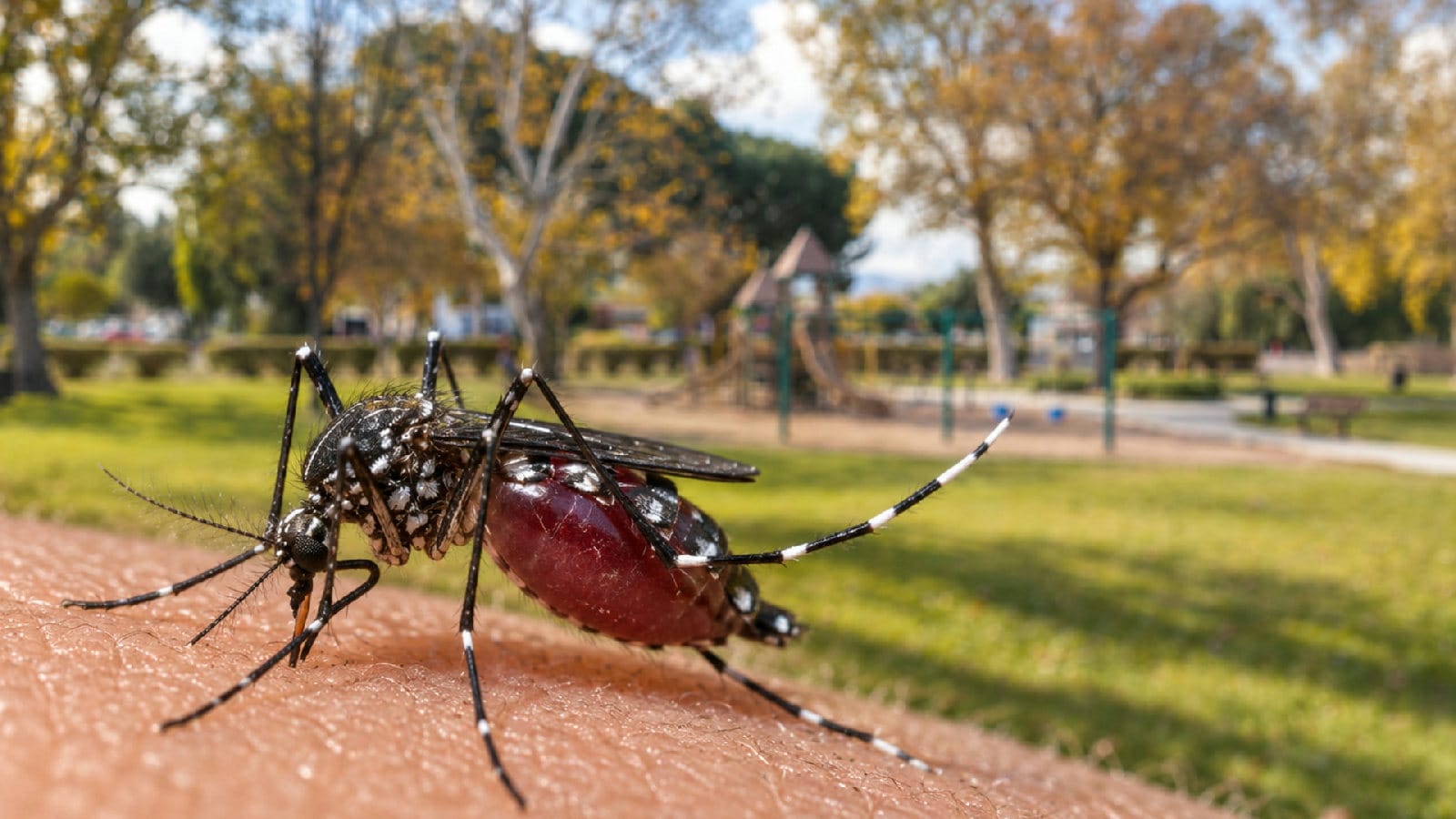
The bite comes in daylight, low and fast, somewhere between the sock line and the knee. By the time a hand swings down, the mosquito is gone. A few seconds later, it often comes back for more. Across Southern California, that pattern has a name. It is Aedes aegypti, an invasive mosquito first found in Simi Valley in September 2020.
The species is getting fresh attention this fall. Evan Lovett, host of the social video series "L.A. in a Minute," called the newcomers smaller, faster and more tenacious than the mosquitoes Angelenos grew up with. That matches what county vector crews have said for years. These mosquitoes fly low and bite during the day. They also prefer people over birds and other animals.
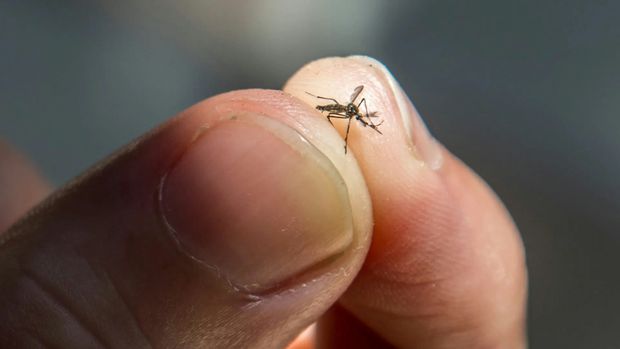
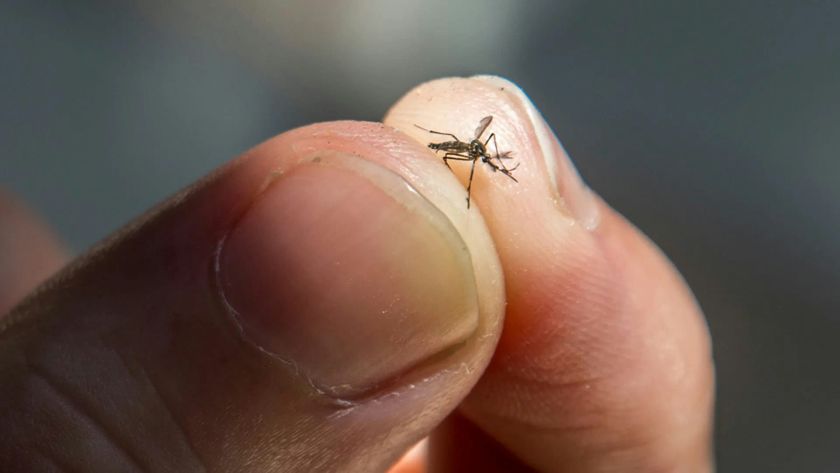
That taste for people is what sets them apart. Most of the mosquitoes Simi Valley has always known belong to the genus Culex. Culex mosquitoes feed heavily on birds and tend to come out around dusk and after dark. Aedes aegypti is small and black with white markings, which makes it easy to miss. It will follow a person indoors or into a car, and it can bite through thin clothing.
How it breeds makes it hard to beat. Steve Solomon, a program lead with Ventura County's Environmental Health Division, explained the problem to KCLU in May. "Only a teaspoon of water is enough for them to survive, lay their eggs, and breed," he said. His crews have found larvae in yard drains, gutter drains, utility vaults and potted plants. The eggs stick to container walls and can survive drying out. That lets them travel in a plant pot or an old tire to a new neighborhood.
Invasive Aedes mosquitoes reached Southern California in waves. Researchers traced an early arrival of a related species, the Asian tiger mosquito, to shipments of "lucky bamboo" from China. Those shipments reached Los Angeles County nurseries in 2001. Officials pushed back that first introduction, but the tiger mosquito turned up in El Monte in 2011 and stayed. Aedes aegypti was first found in California in 2013 and spread south from there. Lovett's video groups both species under the name Aedes.
Since the 2020 find in Simi Valley, the mosquito has spread to more than a dozen Ventura County communities, KCLU reported. KCLU's spring story was set in an east Simi Valley neighborhood. Residents there described more mosquito activity in the summer months, especially around parks.
The disease question is where the popular version of this story needs a correction. Lovett's video says these mosquitoes have not been linked to West Nile, Zika or other serious illnesses. When Ventura County announced the Simi Valley detection in 2020, it warned that Aedes aegypti can carry dengue, chikungunya, yellow fever and Zika. For years, that risk stayed mostly on paper. A mosquito can only spread a virus after biting an infected person, usually a returning traveler.
That changed in Los Angeles County. Seven people there caught dengue locally in 2025, in La Puente, Sun Valley and North Hollywood. In November 2025, the Greater Los Angeles County Vector Control District confirmed dengue in mosquitoes trapped in Sun Valley. It was the first such detection in California. Sun Valley sits roughly 25 miles east of Simi Valley. Officials still describe the overall risk as low.
The usual advice also needs a small update. Staying inside at dawn and dusk helps against Culex mosquitoes. Aedes aegypti does much of its biting in broad daylight, so timing offers little protection. Ventura County's guidance centers on water instead. Once a week, residents should empty and scrub, turn over, cover or throw out anything that holds water. That includes plant saucers, bird baths, pet dishes, toys and tires.
Screens on windows and doors should fit tight. Long sleeves, pants and socks help outdoors, as does an EPA-registered repellent. Pond and fountain owners can get free mosquito fish by calling (805) 662-4582. Anyone bitten during the day by small black mosquitoes with white stripes can call the county's Mosquito Complaint Hotline at (805) 658-4310.
This mosquito is not going back to where it came from. What neighbors control is the water: the saucer under the tomato plant and the bucket by the side gate. In Simi Valley, the fight against this biter is won or lost one backyard at a time.